
Why Wallet Security Now Begins Before You Click “Confirm”
A crypto wallet can be compromised without its private key ever being stolen. That sounds counterintuitive, but it reflects the central security problem in modern DeFi: users are often asked to approve transactions whose economic meaning is hidden behind technical data. A malicious contract may not “hack” the wallet in the traditional sense. It may simply persuade the user to authorize an allowance, signature, or asset transfer they did not understand.
This is why transaction simulation matters, especially when using cross-chain swaps. The difficult question is not merely whether a transaction will execute. It is what the transaction is expected to change: which tokens leave the wallet, which assets arrive, what permissions remain active, and whether the route depends on assumptions that can fail between simulation and settlement.
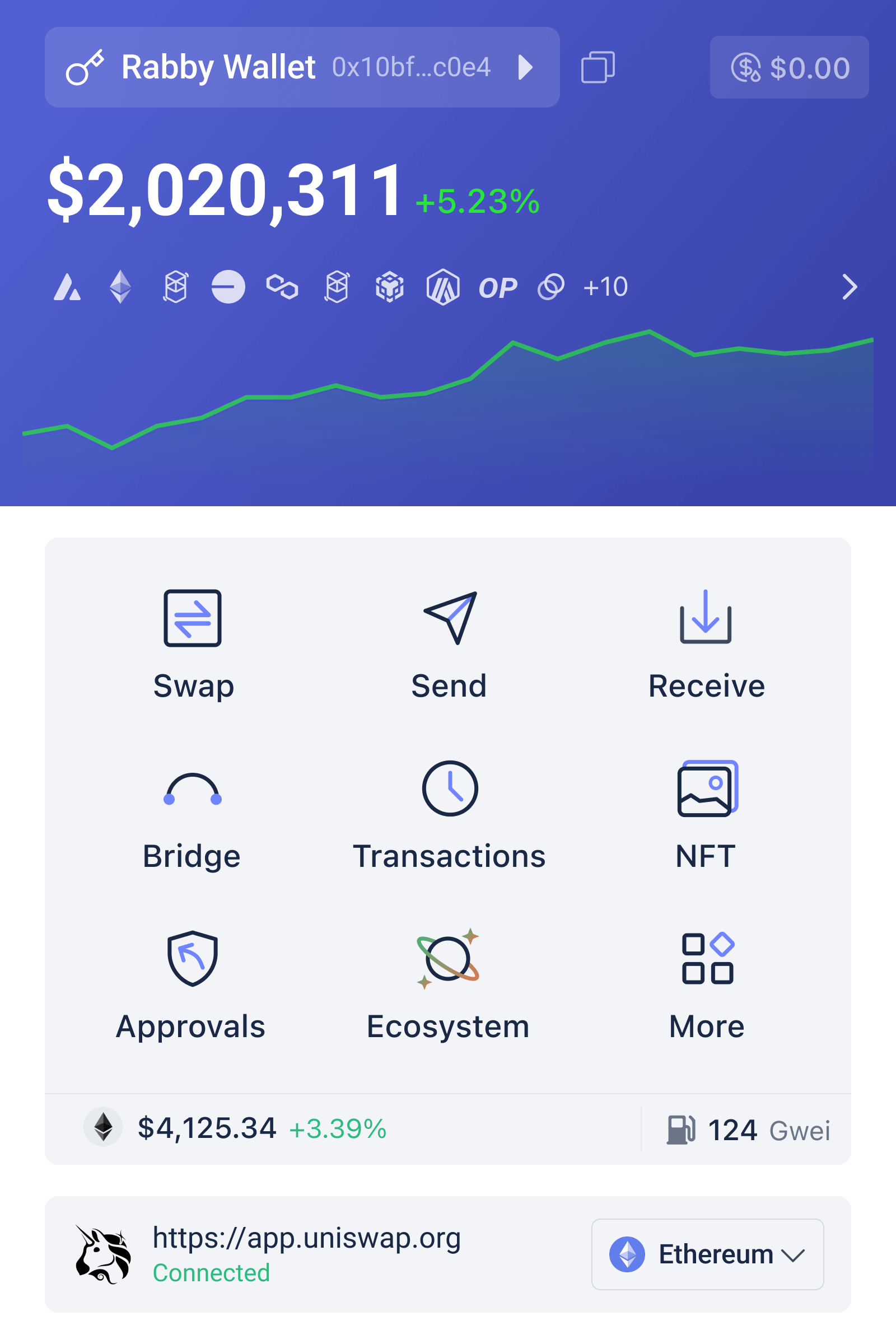
The useful mental model: a wallet is an interpreter, not just a key holder
Most people first encounter a cryptocurrency wallet as a place to store tokens. Technically, a wallet does not store coins in the way a bank account stores dollars. It controls cryptographic keys that authorize changes recorded on a blockchain. The wallet extension is therefore an interpreter between the user and smart contracts: it presents a human-facing explanation of what a piece of transaction data is intended to do.
That distinction creates a security boundary. A blockchain can reliably verify whether a valid signature was produced, but it cannot determine whether the signer understood the transaction. If a user signs an unlimited token approval, the network may treat it as perfectly valid even if the user intended only a one-time swap. Security therefore depends on both cryptography and interpretation.
Transaction simulation adds another layer of interpretation. Instead of showing only a contract address and a function name, a simulation attempts to execute the proposed transaction in a controlled environment and estimate its effects. A useful result may show that a wallet will spend one asset, receive another, pay network fees, or experience a balance change. This shifts the question from “Is this contract call syntactically valid?” to “What would likely happen if I authorize it?”
That is a meaningful improvement, but it is not a guarantee. Simulation is evidence about a proposed execution under particular blockchain state and provider assumptions. It is not an oracle that can eliminate smart-contract risk, market risk, or user error.
What transaction simulation can reveal—and what it cannot
Consider a standard token swap. The transaction may call a decentralized exchange router, transfer an input token, and specify a minimum acceptable output. A simulation can often expose the expected input and output assets, estimated fees, and whether the call reverts under the current conditions. If the wallet instead appears likely to lose a valuable token without receiving the expected counterpart, that is a strong reason to stop and investigate.
The same logic applies to approvals. An approval does not usually move tokens immediately. It grants another contract permission to move tokens later, subject to the allowance. This is one of the most important distinctions for users to learn: a successful transaction can create future spending authority even when the current balance appears unchanged. A security-conscious review should therefore ask two separate questions: what leaves the wallet now, and what authority is being created for later?
Simulation also has boundaries. Blockchain state can change between the moment a transaction is simulated and the moment it is mined. Prices may move, liquidity may disappear, a route may become unprofitable, or a contract may depend on external data. Slippage protection can limit some market movement, but it cannot make an unsafe protocol safe. Likewise, a simulation may accurately reproduce the behavior of a malicious contract and still present that behavior in a way the user misunderstands.
Another limitation is visibility. A simulation may show the direct result of a transaction while leaving broader protocol risks unresolved. A bridge, for example, may deliver an expected wrapped asset on the destination chain while relying on a trust model, validator set, relayer system, or message-passing mechanism that deserves separate scrutiny. “The transaction completed” is not equivalent to “the cross-chain system was secure.”
Why cross-chain swaps deserve a slower review
A swap on one network already involves multiple moving parts: token contracts, liquidity pools, pricing formulas, routing logic, allowances, and gas. A cross-chain swap adds a second execution environment and some method of transferring value or information between them. The user may approve an action on the source chain and later receive an asset on the destination chain through a bridge, liquidity provider, or intermediary protocol.
This creates a useful conceptual distinction between execution risk and settlement risk. Execution risk asks whether the transaction on the current chain does what the interface says. Settlement risk asks whether the complete journey—from source asset to destination asset—will finish as expected. A simulation may be strong at answering the first question and less conclusive on the second.
Cross-chain interfaces can also create confirmation fatigue. Users may see several transactions, network switches, signatures, or approval prompts and begin confirming mechanically. That is precisely when a wallet’s readable transaction analysis is most valuable. The user should pause whenever the requested action changes category: a swap becomes an approval, an approval becomes a signature, or a familiar token is replaced by an unfamiliar representation on another chain.
For US-based DeFi users, there is also a practical operational issue: transactions can be expensive or difficult to reverse once submitted, and tax or record-keeping consequences may depend on the sequence of swaps and transfers. A secure workflow is not only about preventing theft. It is also about preserving an understandable record of what was authorized and why.
Installing a wallet extension without weakening the security model
Downloading a browser wallet should be treated as part of the security process, not as a routine prelude to it. Use the project’s legitimate distribution path, verify that the browser extension is the intended product, and be cautious with search advertisements, copied pages, unsolicited support messages, and “urgent” upgrade prompts. A fake wallet can be more dangerous than a suspicious decentralized application because it may target the recovery phrase itself.
Readers who are setting up the browser version can use this rabby extension download resource as a starting point, then independently check the extension permissions and installation details before importing or creating an account. The most important rule is simple: never enter a recovery phrase into a website, support form, or pop-up that you did not deliberately open for wallet restoration.
After installation, separate convenience from authority. A wallet may connect to many decentralized applications, but connection alone should not be treated as permission to spend tokens. Approvals and signatures are different events, and a careful user should review both. Consider using a smaller balance for experimental protocols, keeping long-term holdings in a separate account, and regularly reviewing allowances where the relevant network and tools make that possible.
A reusable decision framework for signing transactions
Before confirming, review the transaction in four layers. First, identify the action: is it a transfer, swap, approval, permit signature, bridge operation, or contract interaction? Second, identify the assets and permissions: what leaves now, what should arrive, and what authority remains afterward? Third, inspect the conditions: network, recipient or contract, slippage, estimated fee, and whether the transaction is time-sensitive. Finally, ask whether the result still makes sense if the transaction fails halfway through or the destination-side process is delayed.
This framework corrects a common misconception: a transaction warning is not simply a pass-or-fail safety score. It is better understood as a structured conversation with uncertainty. A warning may indicate a known dangerous pattern, but the absence of a warning does not prove that the protocol is trustworthy. Conversely, an unfamiliar contract is not automatically malicious; it may be new, poorly labeled, or simply outside the wallet’s available knowledge.
The strongest habit is to compare the wallet’s interpretation with the application’s stated intention. If a swap interface says you are exchanging a stablecoin for an asset, but the wallet shows an unusual approval, an unexpected recipient, or a different output, stop. Do not let a deadline, airdrop claim, or rapidly changing price convert uncertainty into a signature.
What to watch next
Wallet security is likely to move toward richer transaction interpretation rather than relying only on static address lists. Better systems may combine simulations, contract behavior, allowance analysis, chain-specific context, and clearer explanations of cross-chain settlement. The difficult design problem will be avoiding both extremes: hiding important complexity behind a reassuring green checkmark, or overwhelming users with technical warnings they cannot act on.
The practical implication is conditional. If simulation tools become more accurate and interfaces explain permissions more clearly, users may catch a larger share of accidental approvals and mismatched swaps before signing. If cross-chain systems remain difficult to model or users continue approving prompts without reading them, the security benefit will remain limited. The technology can improve the decision, but it cannot make the decision on the user’s behalf.
FAQ
Does transaction simulation guarantee that a DeFi transaction is safe?
No. It can provide a useful estimate of the transaction’s likely effects and identify some failures or suspicious outcomes. It cannot guarantee that a contract is honest, that market conditions will remain stable, or that a cross-chain settlement process will complete safely.
Why can a wallet request an approval before a swap?
Many token contracts require the swap contract to receive permission to move the input tokens. The approval may be separate from the swap itself. Review its amount and duration where possible, because an approval can create future spending authority even if no tokens move immediately.
What is the safest response to an unexpected wallet warning?
Pause rather than dismiss it. Recheck the application, network, contract, assets, permissions, and expected result through an independent route. If the warning remains unexplained, do not sign. In DeFi, abandoning one uncertain transaction is usually cheaper than trying to recover assets after an irreversible authorization.

As a startup lawyer, with developing expertise in litigation, dispute resolution, compliance, and corporate law, I am committed to helping businesses navigate legal complexities while positioning themselves for growth and innovation. My experience includes drafting complex agreements, supporting SMEs and startups through challenging decisions, and applying practical legal strategies to real-world business needs. Passionate about ethical business practices, I believe the law should not only address immediate challenges but also create lasting impact — empowering businesses to thrive responsibly and sustainably.