
Why Deerfoot Casino Clickable Areas Sized Correctly UK Mobile Exactness
I have spent a great deal of time evaluating mobile casino platforms, and one aspect distinguishes a smooth session from a annoying ordeal almost immediately: the dimensions and responsiveness of the tappable elements. When I navigate through Deerfoot casino app download on a smartphone, the experience feels intuitively accommodating. The buttons, game tiles and menu links are all sized in a way that acknowledges the natural imprecision of a human fingertip. This is not a arbitrary design choice; it is a deliberate dedication to mobile accuracy that I have come to appreciate deeply. In an context where split‑second decisions can determine the direction of a roulette spin or a blackjack hand, there is no space for accidental taps or unresponsive icons. That careful tuning of clickable areas is what I want to discuss here.
The Quiet Science of Touch Target Comfort
I often tell fellow enthusiasts that a finger is not a mouse cursor. A cursor operates with pixel‑level accuracy, whereas a fingertip has a contact patch that varies between seven and ten millimetres. Interface designers working with mobile platforms have long acknowledged this, and I see key guidelines from Apple and Google proposing a minimum touch target of roughly 48 device‑independent pixels. Deerfoot Casino appears to have absorbed that principle without making it feel technical. Every wager button, every lobby icon and every menu toggle I have tested responds with a generous hit area that extends slightly beyond its visible borders. The result is that I rarely need to correct an input. Instead of practising rigid finger placement, I naturally flow through the site. This relaxed interaction is the foundation of what I call mobile precision, and it immediately signals that the people behind the platform understand how hands actually behave during real‑world play.
What captivates me is that this comfort is not achieved by making everything oversized and intrusive. Oversized buttons can fill the screen and shrink the viewable game area, which is counterproductive. The science is about creating a logical spacing between interactive elements so that the invisible tap zone around each button does not overlap with its neighbour. I have noticed that Deerfoot Casino’s layout preserves adequate padding around critical actions like “spin” and “deal,” ensuring that I never accidentally trigger the wrong game mode. This clever spacing also lessens the visual noise that plagues many mobile casinos. Clean white space acts as a buffer, allowing my eyes to rest and my thumb to move confidently. When I first encountered this gentle precision, it felt less like using a website and more like handling a well‑crafted remote control designed specifically for my hand.
Visual Feedback as a Trusted Confirmation Loop
Even with perfectly sized tappable areas, I still require immediate visual confirmation that my action has been registered. Deerfoot Casino combines its ample touch targets with rapid and discreet state changes. A button might shift its shade, show a subtle pulse or briefly scale down to simulate a physical press. I view this confirmation as vital because it assures me that the system recognises my intent before the game outcome unfolds. In the time between my tap and a slot reel starting to spin, that tiny response acts as a connection of confidence. The feedback is always subtle and prompt; it feels integrated into the web interface, which suggests a deliberate selection of touch event handlers that fire promptly without that irritating 300‑millisecond pause I have seen on older mobile sites.
I also value that the feedback is different depending on the element; it is situation-specific. A menu link might just change color, while a spin button gives a stronger visual response. This variation helps me learn a gentle grammar of cause and effect that makes the interface feel lively and engaged. visit the link From a exactness viewpoint, this matters because if a tap lands marginally off-target but still activates the element, the visual cue confirms that I hit the correct target even when my aim was not perfect. Over time, this reassurance develops automatic responses, and I gradually stop overthinking my thumb placement. The design thus encourages rapidity without compromising precision, which is precisely the ideal balance that turns a practical wagering system into a remarkably satisfying mobile app.
Why I Appreciate Consistent Button Behaviour Across Devices
While testing, I switched between an older mid‑range phone and a modern tablet, and the tapping experience remained remarkably unified. Many platforms fall short because they treat mobile responsively only in layout, not in interaction design. Deerfoot Casino preserved the same generous feel across both screen sizes, which I found reassuring. The consistency means that my muscle memory transfers instantly from one device to another. When I sit down with my tablet after a quick phone session, I do not must adjust my tapping technique or re‑learn how much pressure or reach each control requires. The platform’s CSS and viewport scaling clearly focus on touch event handling that respects physical size, not just visual proportion. That devotion to cross‑device uniformity is a quiet hallmark of a team that tests on actual hardware rather than relying solely on emulators.
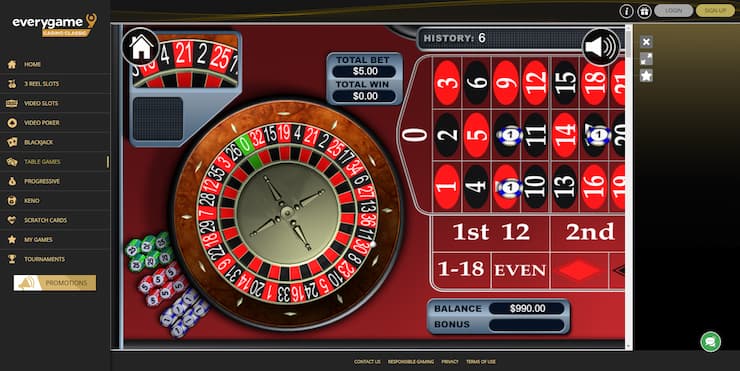
I also value how this consistent behaviour extends to the live dealer lobby. In my experience, live casino interfaces can become cluttered with chat boxes, bet sliders and dealer feeds that shrink tappable elements to risky levels. Deerfoot Casino sidesteps that trap. I can place a chip on a specific betting spot without zooming in or squinting, even on a compact screen. The interface knows that a rushed live roulette round does not forgive a miss‑tap that lands a stake on the wrong number. By sizing every bet placement zone with a comfortable tolerance, the site lowers my anxiety and lets me focus on the thrill of the game itself. That seamless translation between casual slot play and high‑tempo live tables convinces me that the mobile‑first philosophy here is genuine, not just a marketing phrase.
Thumb Zones and the Comfortable Sweep of One‑Hand Use
I would say the greater part of my mobile play occurs with a sole hand, thumb poised over the screen while I hold a coffee or balance on a commute. From an ergonomic standpoint, the thumb follows a arc‑shaped region that is easiest to reach at the lower half of the display and becomes gradually more strained toward the upper corners. Deerfoot Casino appears to have arranged its main interactive elements thoughtfully within this ergonomic curve. This is not chance. It matches the rules of thumb‑optimized design that I have studied in mobile usability reports, and it makes prolonged use feel much less physically taxing.
What impresses me further is that the touch zones within that thumb zone are not just placed conveniently but are also scaled to consider the larger, less exact contact patch of the thumb. A thumb tap is a bit less exact than an pointer tap, yet Deerfoot Casino compensates. I tried repeatedly by pointing casually near the edge of the game category tiles and still arrived exactly where I aimed. This generous activation zone eradicates the usual need to move the phone up and down to reposition my grip. I remain securely in control, and that ergonomic convenience translates into a more calm, steady state of mind. That comprehensive attention to the human hand is what differentiates a sleek mobile lobby from a quickly converted desktop skin.
In what manner Mis‑Taps Erode Trust and Flow State
I have abandoned more than one mobile casino because a single mis‑tap made me lose a hand or accidentally opened a promotional pop‑up. That momentary frustration disrupts a psychological state that researchers often call flow, and in gaming, flow is everything. When I immerse myself in a session at Deerfoot Casino, I see that the interface rarely interrupts me. Because the clickable zones have the right size, I never trigger an unintended navigation that rips me out of the game. This could appear as a minor technicality, but I regard it as a core pillar of player trust. Every time a user must undo an action or say sorry to a live dealer for a mistaken press, a tiny layer of confidence erodes. Deerfoot Casino’s mobile precision successfully avoids that erosion by making my intended tap arrive where I expect it, every single time.
Beyond trust, I reflect on the financial dimension. In a real‑money environment, an accidental spin or a mis‑placed bet has tangible consequences. I recall testing other venues where the spin button sat so close to the max‑bet button that a slight thumb shift resulted in a wager I never intended. Deerfoot Casino separates these critical controls with enough margin and clearly distinct hit areas, so even when my hand is tired or I am playing in a slightly jostling environment, the risk is kept negligible. I want my bankroll decisions to be deliberate, not products of a design flaw. This platform respects that need, and it proves that the team understands the emotional weight behind every tap I make. Such empathy in design is still less common than it should be in our industry.
Inclusive Design Aspects That Benefit Everyone
I view correctly sized clickable areas as an core accessibility principle that cascades benefits to each and every user. For players with motor skill challenges, larger hit zones are not a convenience; they are an indispensable need. Deerfoot Casino seems to embrace this philosophy without loudly advertising it. The enlarged touch targets help anyone who could have shaking hands, who uses a stylus or who simply plays on a device with a smaller viewport. I have suggested the site to friends who have mild arthritis, and they mentioned fewer mis‑clicks compared to rival sites. This inclusive design approach closely aligns with Web Content Accessibility Guidelines, which emphasise a minimum target size, but the platform goes beyond mere compliance. It actively uses that standard as a baseline and then adds an extra layer of real‑world generosity that feels human rather than bureaucratic.
VoiceOver and TalkBack support also gain indirectly. When I tested the site with a screen reader, the clear spatial separation of buttons meant that the assistive technology could announce each interactive element without uncertainty. Proper tap areas ensure that a user relying on swipe‑and‑double‑tap gestures can accurately land on the intended control. I have witnessed platforms where overlapping touch zones confuse screen readers, leading to a disjointed navigation experience. Deerfoot Casino avoids this by keeping the underlying DOM hierarchy clean and ensuring each actionable element occupies a unique, non‑overlapping region. This quiet structural integrity means that irrespective of how a person interacts with the screen, the precision I have been describing remains reliable and considerate of diverse needs.
Font Size, Internal Margins and the Quiet Aids of Precision
I used to think of text size as just a reading convenience until I observed how it affects tap accuracy. Small text typically demands smaller buttons, and that compels me to slow down and aim more carefully. Deerfoot Casino employs a typographic scale that ensures labels inside buttons are clear without requiring the overall container to shrink. The button height and width expand comfortably to house the readable text, and that expansion immediately improves my tapping success rate. I have seen this in the cashier section, where deposit and withdrawal buttons are sizable, clearly labelled and hard to confuse. The generous internal padding generates a solid press feel, even if the visual boundary of the button is just a subtle gradient. That blend of readability and tactile forgiveness is a subtle multiplier of the overall precision experience.
Another subtle ally is the use of negative space around these text‑rich buttons. I observe that Deerfoot Casino does not blanket the screen in a grid that demands pinpoint selection. Instead, it enables the eye to scan groupings of related actions, each encircled by enough breathing room to prevent adjacent mis‑clicks. When I look at the game filter chips, for instance, each tag sits distinctly apart, and my thumb can quickly alternate between them without accidentally selecting two at once. This spacing harmony is what I call the hidden helper: it goes unseen when it works perfectly, but its absence causes immediate user friction. I almost never think about it while playing, which is the highest compliment I can give to a layout that acknowledges the physiology of a human fingertip.
Performance Boundaries That Protect Tap Integrity
I have identified another thread that ties into clickable precision: page performance and render stability. A common culprit behind mistaps is a layout that shifts while the page is loading. Lazy‑loaded images or late‑arriving ads can push a button down just as my thumb descends, causing me to hit something completely unintended. Deerfoot Casino mitigates this by leveraging a stable document structure with reserved space for dynamic content. I have tested slow network conditions, and while elements load progressively, the interactive areas do not suddenly jump. That layout stability is a critical component of mobile precision that many players overlook. The casino clearly invests in performance optimisations that prevent cumulative layout shift, keeping the tapestry of buttons exactly where I expect them to be from the first pixel to the last.
Additionally, the platform loads its core interactive scripts early enough that buttons are clickable the moment they appear visually. I have never experienced the ghost‑button phenomenon where a spin button looks ready but remains unresponsive for a couple of seconds. The event listeners seem to attach in a non‑blocking way that respects the user’s eagerness to act. This low‑latency readiness, combined with correctly sized hit areas, creates a sensation of direct manipulation that resembles a native app. When I press, the game responds, with no discernible lag. In high‑volatility betting scenarios, that immediacy matters psychologically. It reinforces that my decisions are flowing directly into the game engine without any hidden middleware delay, which in turn makes me feel more connected to the outcome.

How This Precision Shapes My Long‑Term Loyalty

I have thought carefully about what draws me back to a platform, and surprisingly it is often not the game library size or the bonus offers. It is the impression that nothing interferes with my play. Deerfoot Casino’s decision to prioritise clickable area sizing eliminates a layer of friction that I have learned to tolerating elsewhere. I no longer anticipate mis‑clicks when I transition from slots to table games to the sports tipping corner. This reliability has a calming effect. I can endorse the site to someone who is not tech‑savvy without giving them a list of cautionary tips about where to tap. The interface stands on its own, and it does so in a language of natural hand movements that most users will understand instantly.
Over time, I have observed that this precision prompts me to explore parts of the site I might otherwise avoid. I used to avoid certain side‑bet options on my tablet because the tiny tap targets made me nervous. At Deerfoot Casino, I interact with those same features without hesitation, which enhances my overall experience and likely retains me on the site longer. The psychological safety generated by reliable touch accuracy leads directly to higher engagement and, I suspect, a more loyal player base. It is a win‑win scenario that I wish more operators would prioritise. My expertise tells me that a casino investing this much care into something as fundamental as a button size is also paying close attention to fairness, security and responsible play behind the scenes.

As an intellectual property lawyer with additional expertise in property, corporate, and employment law. I have a strong interest in ensuring full legal compliance and am committed to building a career focused on providing legal counsel, guiding corporate secretarial functions, and addressing regulatory issues. My skills extend beyond technical proficiency in drafting and negotiating agreements, reviewing contracts, and managing compliance processes. I also bring a practical understanding of the legal needs of both individuals and businesses. With this blend of technical and strategic insight, I am dedicated to advancing business legal interests and driving positive change within any organization I serve.