Why Your Multichain Wallet Needs a Better dApp Connector — and How to Get One
Okay, so check this out—I’ve been poking around wallets and dApp connectors for years. Whoa! Some stuff is actually brilliant. Seriously? Yep. My first reaction was a shrug, then a bit of excitement, and finally a low-grade irritation at how sloppy many connectors still are. Something felt off about the whole user flow; the UX was patched together, security assumptions were loose, and the chrome extension project seemed rushed. My instinct said “you’re gonna get phished if you aren’t careful”, and that turned out to be true more often than not.
For Web3 users who manage assets across chains, a connector is the thin bridge between your wallet and the wild world of dApps. It sounds simple. And yet. On one hand a connector must be frictionless and lightning fast, on the other hand it must act like a paranoid bodyguard. Initially I thought speed mattered most, but then realized that trust granularity is actually the harder challenge. Actually, wait—let me rephrase that: speed is necessary, but without precise permission controls and clear provenance signals, speed becomes an attack surface. Hmm… more complicated than it looks.
Here’s what bugs me about the status quo. Many connectors ask for broad permissions. They hand over wallet state like handing a stranger a house key. Bad. Really bad. Wallets that claim “secure by default” sometimes default to convenience. I’m biased, but I favor explicit prompts and contextual explanations. Users should never approve something they don’t understand. Period. Yet we occasionally see very very important prompts buried in tiny modal footers. Ugh.
Where connectors fail, and what a good one must do
A solid dApp connector must solve three intertwined problems: identity signaling, permission granularity, and chain/asset mapping. Short sentences help. But here’s the long version: identity signaling means the connector proves to both wallet and dApp who the other party is without leaking unnecessary info, permission granularity means the connector can request narrowly scoped authorizations (like signing a single message or spending a capped amount), and chain/asset mapping ensures the dApp doesn’t assume token addresses across EVMs are interchangeable. On one hand, these are design principles. On the other hand, they require engineering work that many small teams skip to ship fast. No surprise. Yet it’s a user security risk that keeps popping up.
Think of permission granularity like setting limits on a credit card. You wouldn’t give your card to a food truck for unlimited spending. Though actually, people do that with wallets every day. The decisions should be atomic. Approve one action at a time. Allow batching if and only if the user opt-ins with clear consequences described. This reduces blast radius when a dApp goes rogue. Also, require attestation for complex actions — prove they are who they say they are. And if a dApp can’t produce it, the connector should fail gracefully, not silently proceed.
I remember a developer conference in Austin where a demo connector auto-switched chains to execute a token swap. Whoa! The presenter thought it was nifty. My gut said “privacy leak” and “attack vector”. It was minor in the demo, but imagine that behavior in a widely-used wallet. Users could be led to a chain where a token’s address maps to a malicious contract. The connector has to show the user: notice, you’re switching networks, here’s why, and what’s at stake. Not hidden, not pre-approved, not buried in tiny type.
Authentication and dApp provenance matter too. Identity in Web3 is complicated. A signature proves control of a key, but not intent beyond the transaction. So connectors need to carry context — metadata about the request, versioning of the dApp manifest, and signatures on manifests. That lets wallets validate the request’s origin and sanity-check the intent against the app’s stated behavior. Sounds heavy, but the payoff is fewer blind approvals and fewer social-engineering wins for attackers.
Okay, here’s a practical workflow that I use and recommend, which any secure connector should implement. Short bullets, short memory: 1) Manifest verification at initial handshake. 2) Scope negotiation per action. 3) User-consent with human-readable rationale. 4) Post-action audit log you can export. Each step reduces ambiguity. Each step increases trust. And yes, it adds clicks. But you know what’s worse? Irrecoverable losses. So choose the clicks.
Let me give a brief example. I was integrating a DeFi aggregator into a multichain wallet. Initially I thought “just sign the meta-transaction”, but then realized the aggregator’s aggregator contracts made nested calls across chains. I paused. I asked for a transaction breakdown, and the connector showed me a graph of the calls, token flows, and the exact allowances requested. That visualized risk, and I adjusted approvals accordingly. Not everyone will have that luxury. But it’s a good model — show the flow, not just the endpoint.
On the technical side, a trustworthy connector should use session-based keys for dApp interactions instead of exposing your master key. Short-lived credentials limit abuse. Additionally, deterministic, auditable transaction pre-parsing helps detect anomalous requests before they hit the signer. This is where wallets can get clever: run a sandboxed simulation of the transaction, extract the economic intent, and surface it to the user as a plain English summary. It won’t be perfect, but it helps. And side note: I use local heuristics and remote validators together. On one hand, privacy favors local checks, though actually remote allowlists can catch known-bad actors faster. Balance is key.
Another nuance: DeFi integrations often require approvals for ERC20 allowances. A connector should default to setting minimal allowances with clear caps and expiry, not infinite approvals. It’s simple advice but underused. Many users keep unlimited approvals green-lit for convenience. The connector can help here by offering a “safe-mode” toggle. When enabled, all approvals are time-capped and amount-capped and require re-authorization after a defined threshold. Users who value speed can opt out, but opt-out should be explicit.
And for cross-chain swaps, the connector must validate the bridges and relayers involved. Don’t trust a bridge because it’s popular. Ask for proofs of liquidity routing and relayer slashing mechanisms. If the connector can verify signature chains from bridge operators, even better. I’m not 100% sure every user will understand the cryptography here, but providing a readable “risk score” and the logic behind it is very helpful.
Okay, quick aside: wallets sometimes try to be too many things. (oh, and by the way…) If a wallet tries to be a full custody provider, a DeFi dashboard, an NFT gallery, and a connector hub, the surface area explodes. I prefer modular design where the connector is a well-specified, auditable module that different wallets can implement. That way, security improvements ripple across the ecosystem. Not perfect, but pragmatic.
Real features I want to see in modern connectors
Short list incoming. Whoa! 1) Declarative manifests with signed metadata. 2) Fine-grained scopes (sign-this-message, send-this-amount, permit-with-cap). 3) Session keys with revocation endpoints. 4) Transaction pre-simulations surfaced as plain language summaries. 5) Default safe-mode for allowances and cross-chain routing. 6) Exportable audit trails. 7) UI signals for chain/address provenance. 8) A privacy-preserving telemetry option to crowdsource malicious dApp patterns. Yes, that’s a lot. But it’s doable if teams prioritize security engineering over gimmicks.
I’ll be honest: building this takes resources. It also takes product discipline and user education. Wallet teams should plan for incremental rollout. Start with manifest signing, then session keys, then granular scopes. Do the hard stuff first that reduces catastrophic risk. Speed features can come later. Also, involve the community in threat modeling. Hackers will find ways around assumptions, but an engaged community can patch social attack routes faster.
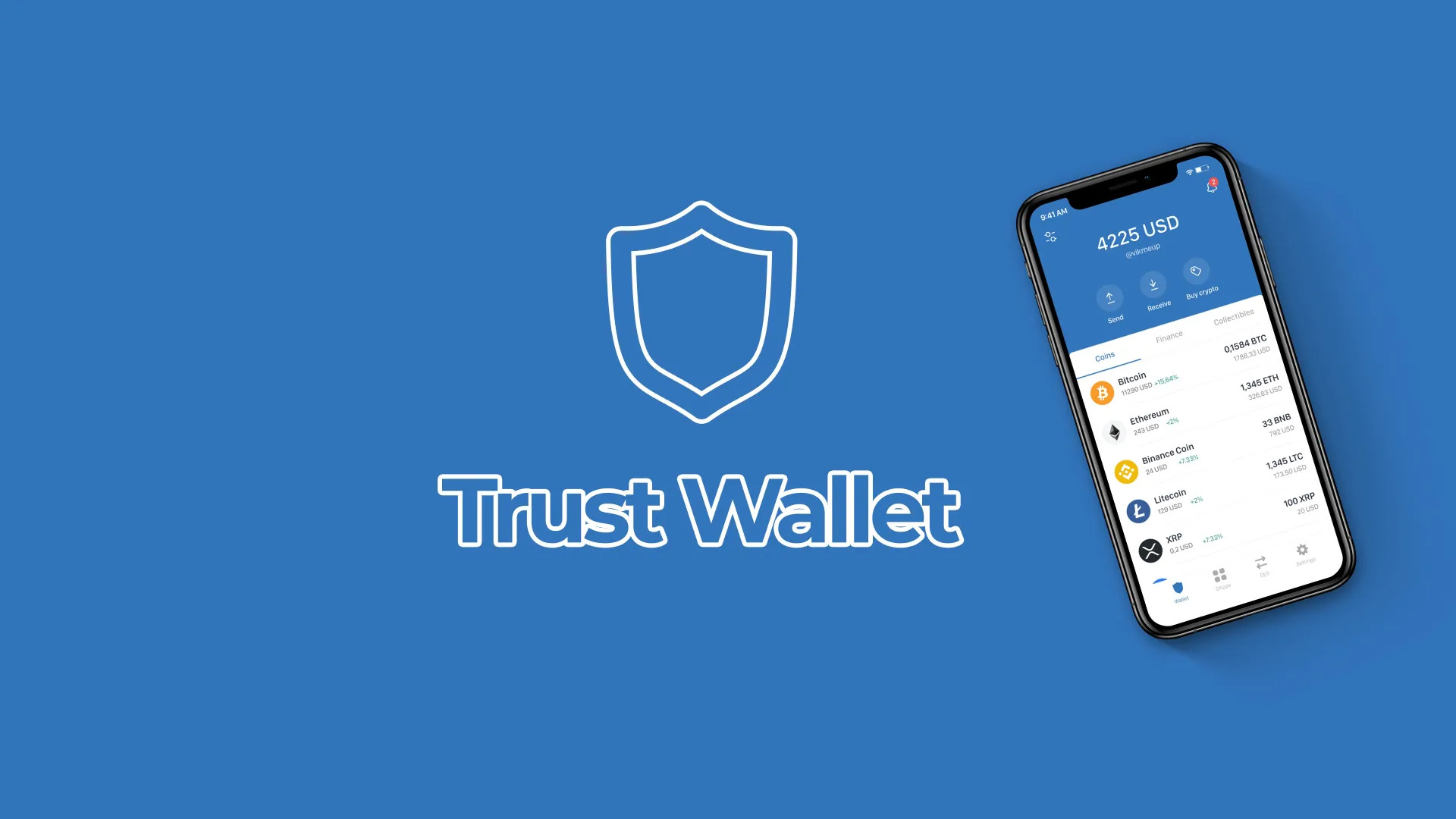
If you’re evaluating wallets right now, look for these signals: does the connector show you which exact contract you’ll interact with? Does it allow you to limit approvals? Is there a clear chain switch confirmation? Is there an audit log? These are the little things that add up to trust. And if you want to check a wallet I’ve used and recommend for basic multichain management, take a look at truts. It won’t solve every problem, but it demonstrates many of the practices I just described in a user-friendly way.
Common questions
How do session keys improve security?
Session keys limit exposure. Instead of using your long-term private key directly, the wallet issues a short-lived session credential for the dApp. If the dApp is compromised, the session can be revoked without sweeping your main key. This reduces the blast radius of an exploit, plain and simple.
Isn’t extra confirmation annoying for users?
Yes, clicks are annoying. But false simplicity is worse when it leads to loss. The trick is to make confirmations meaningful and contextual so users learn faster. Use progressive disclosure: fewer prompts for low-risk actions, more clarity for high-risk ones. Over time users trust the UI and make smarter choices.
Can connectors prevent phishing?
They can reduce it. Technology alone won’t stop sophisticated social engineering, but connectors that verify manifests, show dApp provenance, and surface transaction intent make phishing harder and less profitable. Combine that with community telemetry and user education, and the ecosystem gets safer.

As an intellectual property lawyer with additional expertise in property, corporate, and employment law. I have a strong interest in ensuring full legal compliance and am committed to building a career focused on providing legal counsel, guiding corporate secretarial functions, and addressing regulatory issues. My skills extend beyond technical proficiency in drafting and negotiating agreements, reviewing contracts, and managing compliance processes. I also bring a practical understanding of the legal needs of both individuals and businesses. With this blend of technical and strategic insight, I am dedicated to advancing business legal interests and driving positive change within any organization I serve.